The nation’s eight Regional Fishery Management Councils commemorated the 50th anniversary of the Council system this week during the Council Coordination Committee meeting in Homer, Alaska. The Council system was established by Congress through the Magnuson-Stevens Fishery Conservation and Management Act signed on April 13, 1976. For five decades, the Councils have played a central role in conserving marine resources while supporting fishing communities and a vibrant U.S. seafood economy.
Since their creation, the Councils have promoted sustainable management of U.S Fisheries, in partnership with NOAA Fisheries, states, tribes, and communities. The Councils have rebuilt fish stocks, reduced bycatch, and protected essential fish habitat all while supporting sustained harvest with the goal of maximizing benefits to fishing communities and consumers. The Councils are proud to celebrate 50 years dedicated to:
Supporting Economies and Coastal Communities: Commercial, recreational, and subsistence fisheries are vital to coastal communities and the nation’s economy. U.S. fisheries support millions of jobs, generate billions of dollars in economic activity, and provide seafood to domestic and global markets. Recreational fishing contributes to tourism and outdoor leisure, while subsistence fisheries remain critical to food security and cultural traditions in many regions. Fisheries are more than an industry—they are a way of life deeply tied to the identity of coastal communities nationwide.
A Transparent, Stakeholder-Driven System: The Council system is built on open and inclusive governance. Councils consist of members from each regional maritime state or territory, and represent the commercial and recreational fishing industry, scientists, managers, tribal and Indigenous representatives. Through meetings, advisory bodies, and a robust system for incorporating public comment, community members help shape fishery management measures. This transparent process ensures decisions are grounded in the best available science and informed by on-the-water experience.
Regionally Tailored, Adaptive Management: By design, the Councils provide flexibility to address the unique fisheries, ecosystems, and challenges of each region. From Alaska to the Caribbean, Councils develop management strategies tailored to regional conditions while meeting national conservation standards. The system continues to evolve through adaptive and innovative approaches that respond to changing environmental, economic, and social conditions.
As the Councils look towards the future, they remain committed to sustaining productive fisheries and healthy marine ecosystems for generations to come. Continued investment in collaborative management is essential to supporting the fisheries, communities, and economies that depend on them.
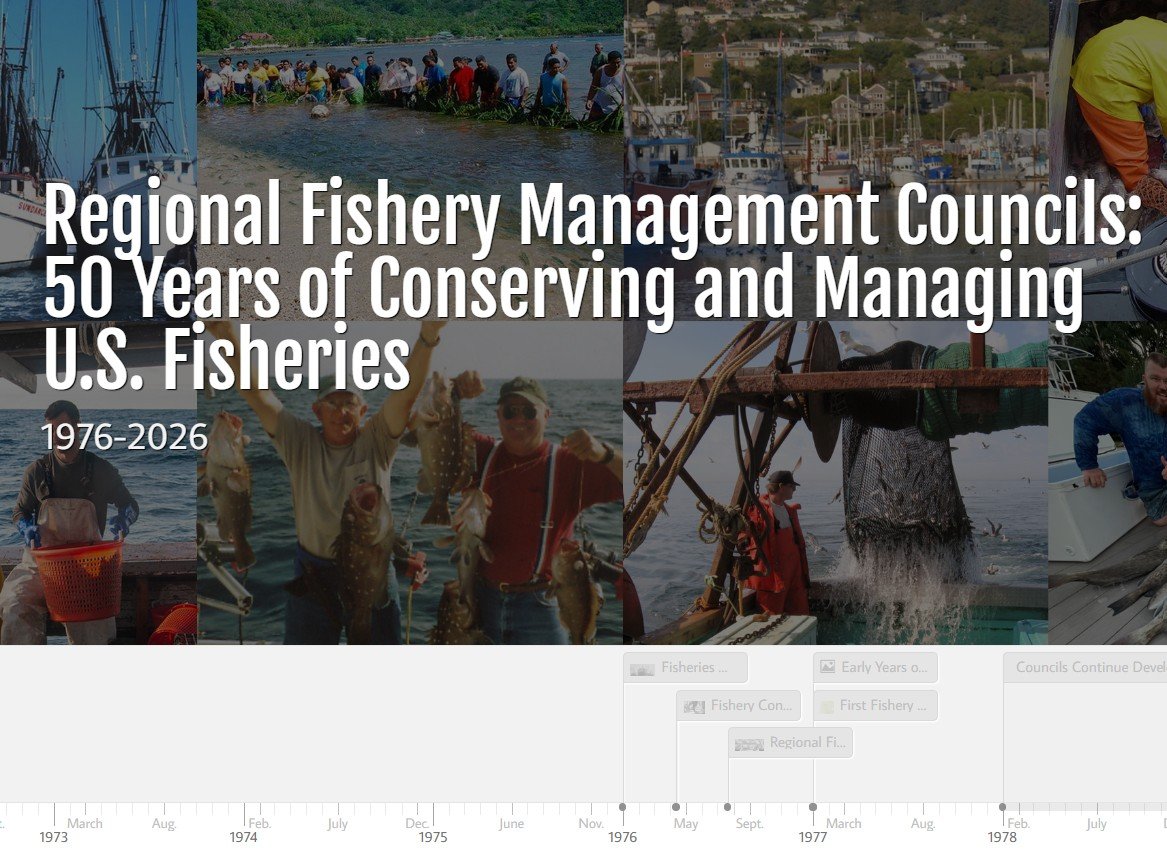
To mark the anniversary, the Councils developed an interactive timeline highlighting major milestones in U.S. fisheries management over the past five decades. Check out the timeline and learn more about the Councils at https://www.fisherycouncils.org/50th-anniversary.